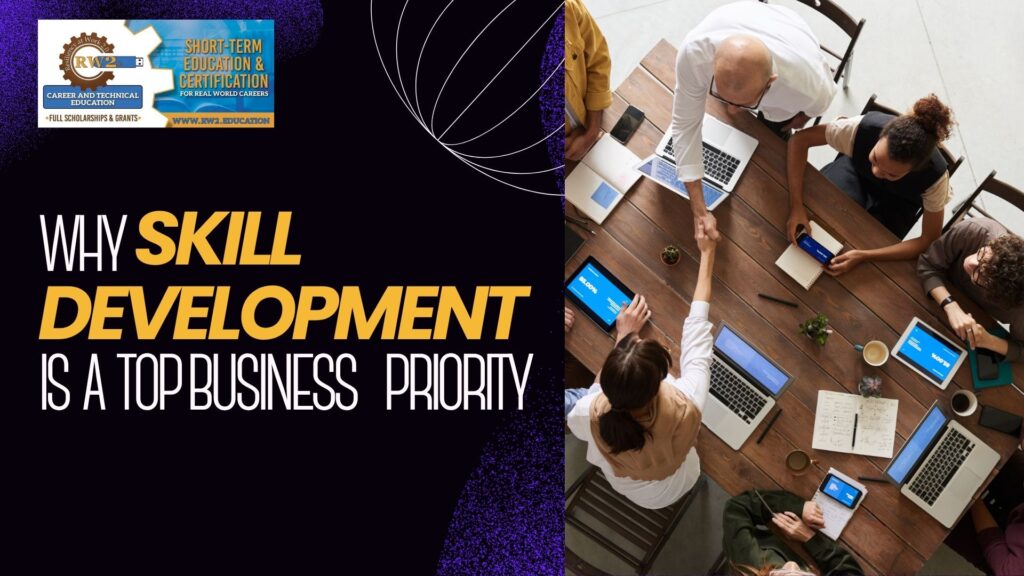
In today’s rapidly changing economy, skill development has become one of the most important priorities for employers, workers, and communities alike. Organizations across industries recognize that people with current, practical skills help businesses innovate, adapt, and grow. In fact, studies show that 83% of organizations now prioritize skill development as a key business focus.
We are creating a future where people can participate fully in the workforce, build meaningful careers, and develop skills that help them thrive. Yet many talented individuals continue to face barriers to education or career growth. Technical careers often seem out of reach because of cost, uncertainty, or lack of experience.
The good news is that employers increasingly value practical abilities, industry knowledge, and continuous learning. This shift creates new opportunities for adult learners, career changers, recent graduates, and people seeking a fresh start.
This article explores why employers are investing in skills, what this means for job seekers, and how workforce training programs such as RW2 Career & Technical Education help learners build confidence, develop job-ready skills, and prepare for long-term career success.
Why Are Employers Prioritizing Skill Development?
Organizations are investing heavily in skill development because the workplace continues to evolve.
Several factors are driving this change:
- Rapid technological advancements
- Growing cybersecurity risks
- Digital transformation initiatives
- Workforce shortages
- New software and automation tools
- Changing employer expectations
Employers need workers who can adapt, learn new technologies, and solve problems.
Many businesses now focus on:
- Technical abilities
- Communication skills
- Teamwork
- Critical thinking
- Adaptability
- Continuous learning
Companies understand that investing in people helps organizations remain competitive while helping employees grow professionally.
How Are Technology Changes Affecting Today’s Workforce?
Technology is changing nearly every industry.
Construction companies increasingly use digital design tools. Businesses rely on secure computer networks. Manufacturers use automation. Healthcare organizations depend on technology systems.
As technology evolves, workers must continue learning.
Examples include:
- Computer-aided drafting software
- Building information modeling systems
- Cybersecurity tools
- Cloud technologies
- Digital collaboration platforms
Workers who continue developing their skills often have greater flexibility and more career opportunities.
The ability to learn new technologies has become just as important as existing experience.
Why Are Cybersecurity and Digital Transformation Creating New Opportunities?
Digital transformation has created tremendous opportunities but also new risks.
Organizations face growing cybersecurity threats, including:
- Data breaches
- Phishing attacks
- Malware
- Network vulnerabilities
- Information security risks
As businesses adopt new technologies, they need professionals who understand information security principles and can help protect systems and data.
Cybersecurity careers continue to grow because nearly every industry requires security professionals.
Students interested in cybersecurity can develop skills in:
- Network security
- Threat identification
- Information protection
- Security tools
- Python programming
- Security operations
RW2’s cybersecurity program helps learners build foundational information security knowledge while preparing students for the CompTIA Security+ certification examination. Completion includes practical projects and career preparation activities.
Do Employers Still Value Degrees, or Are Skills More Important?
A college degree remains valuable, but many employers increasingly focus on practical abilities.
Employers often ask:
- Can the candidate perform the work?
- Do they understand the tools used in the industry?
- Can they communicate effectively?
- Are they willing to learn?
This shift has increased demand for job-ready skills.
Employers frequently value:
- Technical competencies
- Portfolio projects
- Certifications
- Problem-solving abilities
- Workplace professionalism
- Team collaboration
For many learners, workforce training offers a pathway to build practical experience without pursuing a traditional four-year degree.
Continuous learning has become essential because industries continue to evolve.

What Technical Skills Are Most In Demand Today?
Several technical fields continue to offer strong career opportunities.
Cybersecurity
Information security professionals help organizations protect data and systems.
Potential roles include:
- Security Operations Center Analyst
- Information Systems Analyst
- Systems Security Analyst
- Help Desk Specialist
Computer-Aided Drafting and Design (CADD)
CADD professionals create technical drawings and design documentation.
Common responsibilities include:
- Producing construction drawings
- Drafting architectural plans
- Creating technical documentation
- Supporting engineers and designers
Potential job titles include:
- CADD Technician
- Drafter
- Drafting Technician
- CAD Technician
Building Information Modeling (BIM) and Revit
Building Information Modeling combines design and technology to create detailed digital building models.
Career opportunities include:
- Revit Technician
- BIM Technician
- Detailer
- VDC CAD/BIM Technician
These careers allow individuals to contribute to construction, architecture, engineering, and design projects.
RW2 offers training in CADD, Revit for Building Information Modeling, and Cybersecurity through live online instruction led by industry-experienced instructors. Programs range from 14 to 24 weeks depending on the field of study.
How Does Workforce Training Help Build Job-Ready Skills?
Workforce development focuses on preparing people for real-world careers.
Effective training includes:
- Industry-relevant curriculum
- Hands-on projects
- Technical instruction
- Soft skills development
- Career preparation
- Portfolio development
Job-ready skills extend beyond technical knowledge.
Successful professionals also need:
- Communication skills
- Time management
- Business ethics
- Teamwork
- Problem-solving
- Workplace professionalism
RW2 integrates technical training with career readiness resources, helping students build confidence and prepare for workforce participation. The programs also support resume development, interviewing skills, portfolio creation, and job search.
How Does RW2 Prepare Learners for Today’s Workforce?
RW2 Career & Technical Education helps people prepare and skill up for careers in the technically skilled workforce through short-term education, training, and certification preparation.
The organization provides:
- Flexible online learning
- Live instructor-led classes
- Industry-aligned training
- Career readiness support
- Portfolio development
- Certification preparation
- Work-based learning opportunities
Students learn from instructors who bring industry experience and real-world knowledge into the classroom.
RW2 emphasizes:
- Resiliency
- Real-world learning
- Career referrals
- Practical skill development
The organization also supports learners through flexible payment options, scholarship opportunities, and career guidance resources.
Most importantly, RW2 focuses on helping people discover their strengths, build confidence, and participate fully in technical careers.
Frequently Asked Questions
Q: Is skill development important for every career?
A: Yes. Nearly every industry now requires continuous learning because technology and workplace expectations continue to evolve.
Q: Can adults change careers through technical training?
A: Absolutely. Many adult learners pursue workforce training to gain new skills and transition into growing industries.
Q: Do I need previous experience to enroll?
A: No. RW2 programs are designed to support beginners while also helping experienced learners expand their knowledge.
Q: How long does RW2 training take?
A: CADD programs are 14 weeks, Revit/BIM programs are 15 weeks, and Cybersecurity programs are 24 weeks.
Q: Does RW2 offer online learning?
A: Yes. Programs include live online instruction and learning resources that support flexible participation.
Q: Are certifications included?
A: Cybersecurity students receive preparation for the CompTIA Security+ certification exam, while all programs provide certificates of completion.
Q: Does RW2 help with career preparation?
A: Yes. Students receive support with resumes, interviewing, portfolios, and job and career fair notifications.
Building Skills for the Future
Skill development is no longer simply a workplace trend. It has become an essential part of career growth, workforce participation, and long-term opportunity.
As employers continue seeking adaptable, knowledgeable, and job-ready professionals, individuals who invest in learning can position themselves for meaningful careers and greater confidence.
Technical careers in cybersecurity, drafting, and building information modeling offer pathways for people who want to contribute, solve problems, and continue growing throughout their careers.
RW2 Career & Technical Education helps learners develop the skills, confidence, and experience needed to participate in today’s workforce. Through supportive instruction, practical learning, and career-focused training, students can discover new opportunities and build a stronger future.
RW2 also understands that the cost of education can be a barrier for many learners. Depending on eligibility, financial assistance may be available through programs such as the Fast Track Workforce Incentive Grant for eligible Missouri residents, the Great Jobs KC Scholarship for qualifying students in the Kansas City region, and Kansas WIOA (Workforce Innovation and Opportunity Act) funding, which may help eligible job seekers and workers cover the cost of approved workforce training.
These resources are designed to help more people pursue career-focused education and build in-demand skills with greater confidence.
If you’re exploring technical careers and want to learn more about upcoming training opportunities, available financial assistance, and the enrollment process, complete the General Interest Form.
It’s a simple first step toward discovering a training pathway that supports your goals, builds your skills, and prepares you for today’s workforce.