We’re creating a future where education connects directly to real opportunity, and career and technical education is one of the clearest paths to that future. Career and Technical Education (CTE) is skills-based learning that prepares people for real work through hands-on training instead of long academic detours.
Today’s workforce is changing quickly, and many learners choose short-term, practical training instead of long academic pathways. Modern CTE providers—including organizations like RW2 Career and Technical Education—show how education can focus on applied skills, real tools, and workforce readiness.
What Is Career and Technical Education (CTE)?
Career and Technical Education (CTE) is education designed to prepare learners for specific careers through hands-on learning and industry-aligned skills training. Instead of focusing on theory, CTE emphasizes practical application and workforce preparation.
At its core, cte education meaning is about building skills people can demonstrate immediately in real workplaces.
CTE focuses on:
- Hands-on learning environments
- Industry-aligned training
- Project-based instruction
- Applied problem-solving
- Workforce preparation
- Job-ready skills
Learners don’t just absorb information, they actively build competence that translates into real participation in technical careers.
How Is Career and Technical Education Different From Traditional College?
Career and technical education is not a replacement for college. It is a different path designed for learners who want faster entry into the workforce and more applied training.
Here’s a clear comparison:
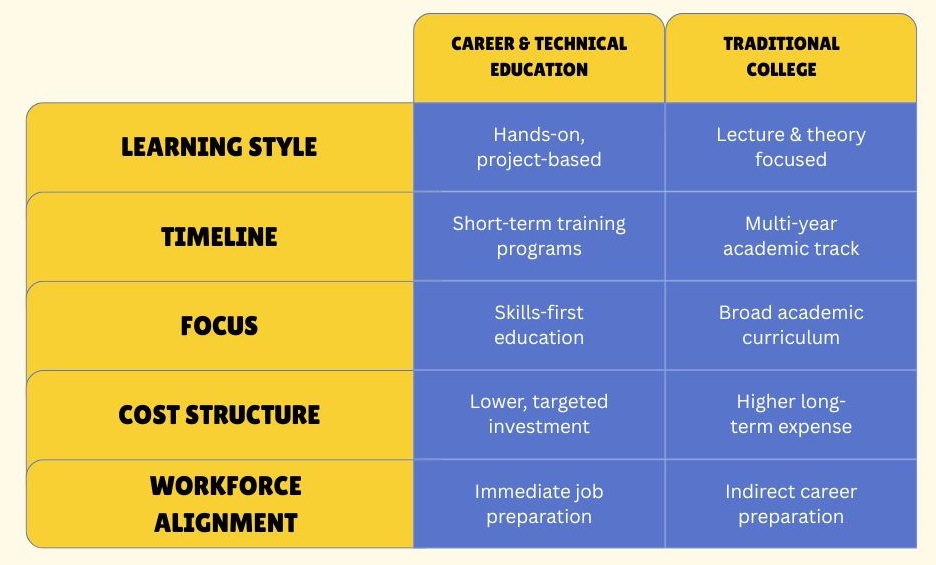
Both paths are valid. CTE simply centers efficiency, applied learning, and workforce readiness.
What Careers Can Career and Technical Education Lead To?
Career and technical education organizes learning into career clusters, which group industries by shared skills and workforce needs. This structure helps learners understand how training connects directly to real economic demand rather than abstract academic pathways.
Industries such as information technology, cybersecurity, and architecture, engineering, and construction continue to expand faster than traditional education pipelines can supply skilled professionals. These sectors rely on skills-based education to build practical competence and expand participation in technical careers.
Career and technical education jobs exist across digital infrastructure, technical operations, and modern construction environments where applied ability matters more than academic pedigree. CTE creates a direct connection between learning and workforce participation, allowing learners to enter industries that value hands-on expertise and problem-solving ability.
Instead of preparing students for a distant future, CTE prepares them for immediate contribution.
IT, Cybersecurity, and AEC Career Pathways
Information technology training focuses on managing systems, supporting networks, and maintaining the digital infrastructure that modern organizations depend on. Learners work with real platforms and environments that mirror workplace expectations, developing the ability to troubleshoot issues and sustain operational systems.
Cybersecurity training centers on protecting digital assets, identifying threats, and responding to real-world risks. Students practice applied problem-solving and cybersecurity certification preparation that reflects the challenges organizations face every day. The emphasis is not on theory alone, but on practical defense strategies and confidence using security tools.
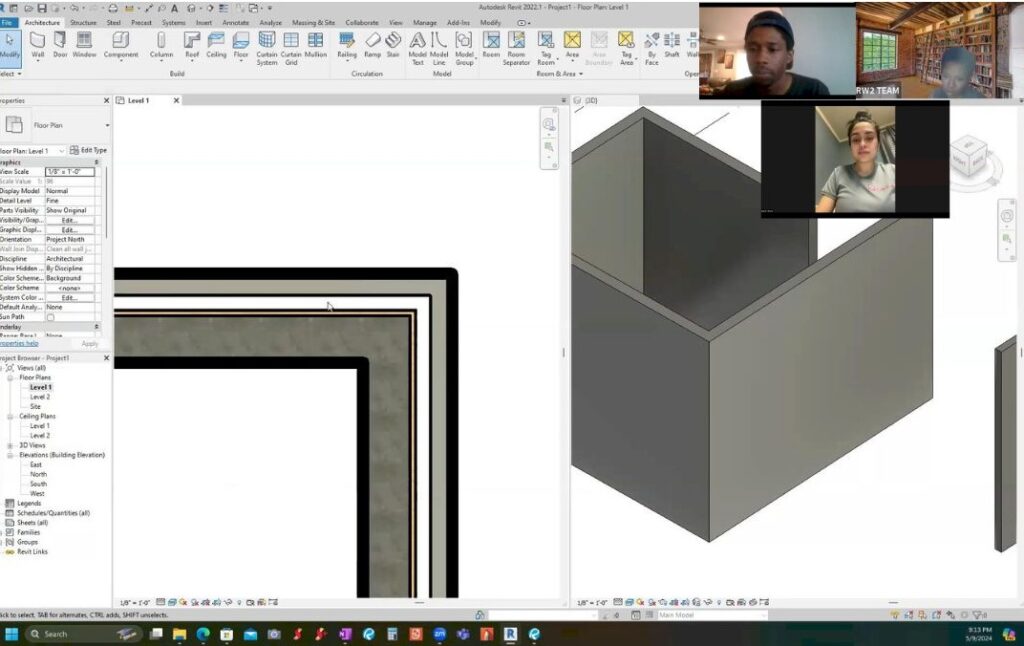
Architecture, engineering, and construction training builds technical skill in digital drafting, modeling, and construction documentation. Tools used in CADD and Revit BIM workflows are the same tools shaping modern building environments, allowing learners to contribute to real design and planning processes.
Across all three pathways, students develop competence that mirrors professional expectations.
How Does Career and Technical Education Prepare Students for Real Jobs?
Career and technical education prepares learners through action-based learning that reflects how work happens in real environments. Instead of memorizing abstract concepts, students complete applied projects using the same technologies and workflows found in industry settings. Project-based learning strengthens problem-solving ability, while portfolio development allows students to demonstrate their skills in tangible ways.
Exposure to work-based learning environments introduces professional expectations early. Learners practice collaboration, meet deadlines, and simulate workplace scenarios that build confidence alongside technical ability. The result is demonstrable competence rather than theoretical knowledge alone, helping students transition into workforce participation with practical readiness.
What Is RW2 and How Does It Fit Into Career and Technical Education?
RW2 is a Career and Technical Training Provider that offers short-term, skills-focused programs in AEC, IT, and Cybersecurity to prepare learners for workforce entry and advancement. The organization reflects the modern direction of career and technical education by centering opportunity, belonging, and participation in technical careers. Training is designed to reduce barriers and focus on applied growth rather than academic gatekeeping.
RW2 Programs
RW2 delivers industry-aligned technical training through focused programs in Computer-Aided Drafting and Design, Revit for Building Information Modeling, and Cybersecurity.
Each program follows a short-term structure that prioritizes skills-first instruction and industry relevance. Learners build applied competence using the same tools professionals rely on, helping them transition into technical environments with confidence and practical experience.
Certifications and Credentials
RW2 prepares learners for industry-recognized certifications, including CompTIA Security+. While certifications are not required, students are strongly encouraged to pursue them because credentials validate technical ability within the workforce.
Preparation emphasizes understanding, practice, and confidence rather than exam pressure.
Student Outcomes and Workforce Readiness
Students leave RW2 programs with job-ready skills supported by portfolios that demonstrate applied learning. Training strengthens confidence using industry tools and reinforces understanding of workplace expectations.
The emphasis is on preparation and readiness, not guarantees, ensuring learners can participate meaningfully in technical careers and continue growing professionally.
Enrollment Pathways
RW2 welcomes adult learners, career switchers, and nontraditional students seeking supportive entry into technical training. Programs are structured to create opportunities for people facing barriers to education or career growth.
Enrollment pathways focus on accessibility, participation, and practical support, allowing learners from different life stages to enter workforce-aligned training.
Who Is Career and Technical Education For?
Career and technical education serves a wide spectrum of learners seeking practical pathways into technical careers. Adult learners returning to education, career switchers exploring new industries, and parents evaluating workforce-aligned options all benefit from skills-based training.
Workforce partners also rely on CTE to build pipelines of prepared talent.
Rather than framing education as remediation, CTE expands opportunity and voice by focusing on applied skill development. It allows learners to participate in growing industries without unnecessary detours.
Why February Is Career and Technical Education Month
Career and technical education month highlights the essential role skills-based education plays in strengthening the U.S. workforce. Throughout February, schools and training providers spotlight how technical training connects people to opportunity and supports economic growth.
The celebration emphasizes the importance of workforce development, technical career pipelines, and short-term training programs that respond directly to industry demand.
As workforce needs evolve, CTE month reinforces the value of education models that prepare learners for participation in real careers rather than distant possibilities.
Frequently Asked Questions About Career and Technical Education
What does CTE stand for in education?
CTE stands for Career and Technical Education. It is hands-on training designed to prepare learners for specific industries.
Is career and technical education only for high school students?
No. Many programs serve adult learners and career switchers seeking technical careers.
Can CTE lead to IT, cybersecurity, or AEC careers?
Yes. These industries rely heavily on workforce-aligned technical training.
Do CTE programs include certifications?
Many prepare learners for credentials like CompTIA certification.
How long do CTE programs usually take?
Short-term programs often run weeks to months, not years.
How can students enroll in a CTE program like RW2?
RW2 partners with different organizations such as Great Jobs KC and Goodwill for student referrals. Learners also contact the provider, review pathways, and select training aligned with goals.
Conclusion: Skills-Based Education as a Career Path
Career and technical education is a practical, respected pathway into technical careers. It removes unnecessary barriers and focuses on demonstrable skills, opportunity, and workforce alignment.
For learners seeking faster entry into meaningful work, CTE offers a direct route into growing industries. Programs like RW2, next class start February 16, show how skills-based education connects people to real careers while expanding participation in technical fields.